Get ready for some PNH science!
About PNH
This is what happens in your blood when you have PNH
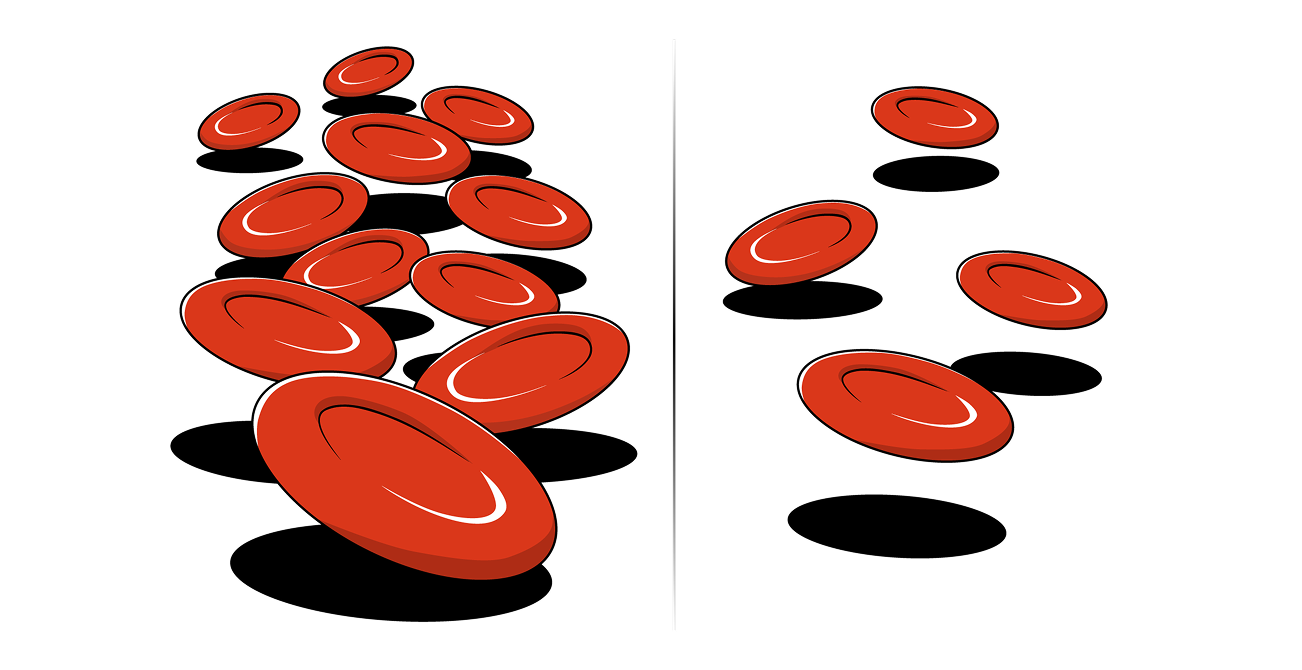
Normal red blood cell
Normal red blood cells have a protein layer, called CD59, that protects them from the immune system.

PNH red blood cell
PNH red blood cells lack the CD59 layer due to a mutation in the PIG-A gene. This leaves them open to being attacked by the complement system (part of the immune system).

The complement system attacks PNH red blood cells through a process called hemolysis.
"Hemo" = refers to blood
"Lysis" = means to burst
There are two types of hemolysis that can happen:
- Intravascular = hemolysis inside the circulatory system (made up of blood vessels that carry blood to and away from the heart)
- Extravascular = hemolysis outside the circulatory system (e.g., inside the spleen)

When PNH red blood cells are destroyed, the hemoglobin that they contain is released and removed from the body.
This results in lower levels of hemoglobin, known as anemia, triggering many PNH symptoms, such as fatigue and shortness of breath.
Look out for a hemolytic crisis
When hemolysis happens quickly, and more red blood cells are being destroyed than made, it can cause a hemolytic crisis. When this happens, hemoglobin levels drop quickly. This can sometimes result in the need for a blood transfusion, and can also cause a flare of PNH symptoms.
What causes a hemolytic crisis?
- Lack of or defects in certain proteins that are inside red blood cells
- Autoimmune diseases
- Bacterial or viral infections
- Side effects to certain medications
- Reactions to blood transfusions
Related topics
Signs and Symptoms
Understand common PNH symptoms and when to seek medical attention for complications.
Resources for your PNH journey
Sign up for our newsletter and discover other Canadian and international PNH organizations.
Find a PNH Specialist near you
Search by province or territory to locate clinics and specialists experienced in PNH.